
In March 2017, FC Barcelona pulled off one of the most improbable comebacks in football history — a 6-1 win over Paris Saint-Germain that overturned a 4-0 deficit. The celebrations were enormous. Yet within a few seasons, the club was drowning in debt, losing its biggest stars, and alienating the very fans who had celebrated that night. The victory, it turned out, came with a bill nobody had planned for.
Global public health has lived through its own version of this story — just on a much longer timeline, and with much higher stakes.
We Won the Fight Against Early Death. Now What?
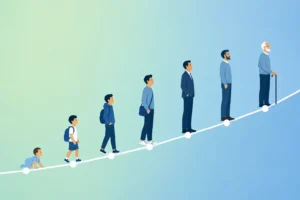
Over the 19th and 20th centuries, medicine and public health scored one of humanity’s greatest victories: infectious diseases were brought under control, infant mortality plummeted, and early death became far less common. As a result, global life expectancy has doubled.
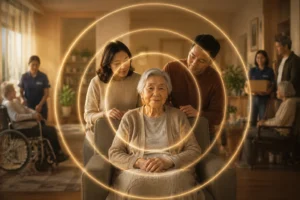
It should have been an unambiguous triumph. Instead, it has produced a slower-moving but equally serious crisis: a relentless rise in elderly populations that is now straining families, hospitals, and pension systems across the globe. The world celebrated longer lives — but never got around to redesigning itself for the people living them.
The question this raises is simple, and uncomfortable: if we conquered disease and doubled human lifespan, why does it feel like we’re now paying the price for our own success?
The Price Tag: 14 Trillion Euros — and Counting
The scale of the challenge is staggering in raw numbers alone. The global annual bill for health and long-term care for people over 60 is projected to exceed 14 trillion euros by 2050 — a figure larger than the current combined GDP of the entire African continent.
But aggregate statistics like this one hide something more important: a cost that is being paid one household at a time, in currencies that don’t show up on any balance sheet — lost income, missed sleep, and quiet resentment.

Japan: When a Pension Isn’t Enough
Consider Hiroshi, 72, a retired factory worker in Japan — the world’s most aged nation. He cares for his 94-year-old mother, who lives with advanced dementia. Nearly 70% of his monthly pension goes toward her home care. Even so, Hiroshi has been told he must wait six months for a subsidized nursing home bed to open up. He has confided to a social worker that he feels guilty for resenting the mother he loves.
Indonesia: Care Without Infrastructure
Now consider Siti, 45, a street food vendor in Jakarta. She quit her job to look after her father after he suffered a stroke. In Indonesia, there are fewer than 0.2 geriatricians per 100,000 older adults — a near-total absence of specialized elder care. Siti pays a visiting nurse out of pocket, an expense that consumes nearly half her family’s income. Her father has never once had a formal blood pressure check.
Both Hiroshi and Siti are doing something extraordinarily difficult inside systems that, so far, have mostly offered information kiosks and a handful of remodeled public spaces for seniors. That is the real price of longevity — and it grows even steeper for anyone aging without family nearby.
A Cost That Never Stands Still
Unlike a stadium debt or a departed star player, the cost of an aging population isn’t fixed. It shifts constantly as disease patterns, technology, and pharmaceuticals evolve — and different generations absorb those shifts differently.
Nowhere is this clearer than in the growing role of digital health tools. As one geriatrician put it in a recent health systems study:
“Many of my patients cannot use a smartphone. Their grandchildren have to hold the phone for them. And without reliable internet, I never get the data.”
This is not simply a cost of medicine or a doctor’s time. It is a digital literacy gap layered on top of already-thin healthcare access — a hidden tax that falls on the youngest generation, who become unpaid technical support for their grandparents’ care.
Because health systems typically calculate the cost of elderly care using hospital beds, medication, and nursing hours, they systematically miss these dynamic, multi-generational costs. The result: well-designed interventions — remote monitoring for heart failure, for example — quietly underperform. Not because the medicine is flawed, but because the estimate of the true cost was incomplete from the start. In lower-income settings, this miscalculation compounds further, since public health cost isn’t one-dimensional — it’s money, time, digital skill, family bonds, and even bus fare, all at once.

We Celebrated Longevity. We Never Redistributed the Load.
In an interview with BMJ Global Health, Brazilian gerontologist Dr. Isabella dos Santos — a former advisor to the Pan-American Health Organization — was asked how the world has responded to population aging since it first became a global concern in the 1990s. Her answer was blunt: in low-income nations, informal and family-based care can account for as much as 90% of all elder care provided.
“We celebrated longer lives, but we never redistributed the load. The result? Remarkable health gains alongside remarkable social stagnation.”
That, in the end, answers the original question. It feels like we’re paying the price for longer lives because we extended human lifespan without extending the social and economic infrastructure needed to make those extra years livable. Families — and disproportionately, women — have been left to absorb the difference: lost wages, unpaid caregiving hours, and emotional exhaustion that rarely gets counted in any national health budget.
The Way Forward
There’s a postscript worth noting from the football story that opened this piece: Barcelona eventually returned to winning form, not through another miracle, but through patient rebuilding — investing in young talent and managing resources wisely.
Population aging may need the same kind of unglamorous, structural patience: redesigning pension systems, training more geriatric specialists in underserved regions, closing the digital divide for older patients, and — most importantly — formally recognizing and supporting the unpaid caregivers currently holding the system together.
The world successfully bought humanity extra decades of life. The next task, still largely unfinished, is making those decades livable for everyone who earns them.