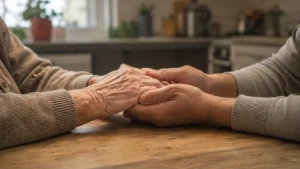
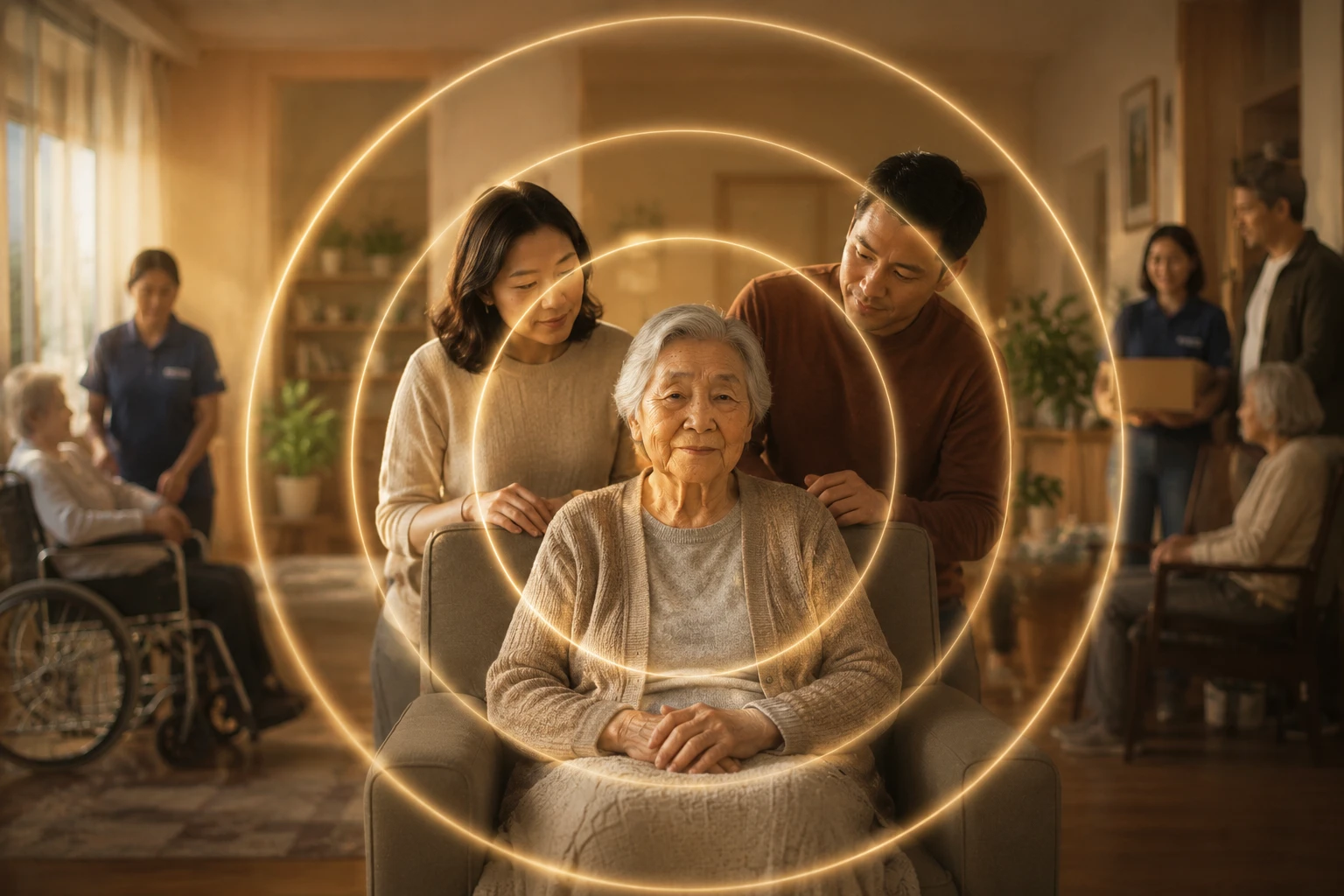
Heart disease remains the leading cause of death among people over 65, and after age 65, the risk of a heart attack or stroke roughly doubles every ten years. More than 400 million older adults worldwide currently live with some form of heart disease. But the effects of an aging heart don’t stop at the body — they radiate outward, first through families, then through communities, and finally into national politics and economies. Each ring is wider than the last, and each one carries a heavier public cost.
The real question isn’t medical. It’s economic and social: when a parent lives into her nineties, who actually carries the weight — families, governments, or strangers?
The First Ring: What Happens Inside the Household
For many families, an aging parent’s growing dependence arrives as a surprise. From wealthy nations to low-income ones, the same pattern repeats: someone has to pay for the pills, the appointments, the daily support. In places with weak social protection, either the older person or their family pays out of pocket — and skipping doses to save money becomes a real, quiet danger. Where cost-sharing exists, the burden eases, but someone younger is still footing part of the bill.

Beyond money, there’s a subtler struggle. As mobility fades, eyesight blurs, and hands lose dexterity, social circles shrink. In some households, multigenerational living absorbs the shock smoothly — grandchildren refill medications, handle paperwork, and run errands without being asked. In others, an aging parent manages largely alone, adapting with quiet courage.
These informal acts of care fill gaps that formal healthcare systems leave wide open. But this kind of support cannot be guaranteed. It varies by culture, income, geography, and plain luck — which makes it a fragile foundation for something as universal as aging.
The Second Ring: Paid Caregivers, Stretched Thin
The next ring out is made up of professional caregivers — nurses, home health aides, and nursing home staff. They are strangers by contract, not by blood, yet they carry a heavy share of the weight. Globally, these workers cluster in cities, where private agencies and hospitals concentrate their services. Elderly people in rural areas are left with far fewer options — sometimes none at all.
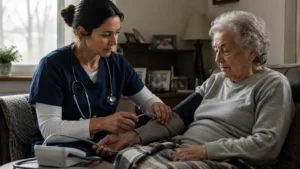
In Europe, the shortage is already acute: the European Federation of Nurses estimates a deficit of more than one million caregivers by 2030. And much like the unpaid family caregivers who fill the first ring, nearly 90% of formal caregivers worldwide are also women — frequently underpaid, overworked, and stretched thin enough that their own families can end up neglected in turn.
The Third Ring: Governments, Markets, and Broken Promises
The outermost, widest ring has three moving parts: international commitments, national politics, and market forces — and they rarely move in sync.
International commitments do exist. The United Nations’ Sustainable Development Goals include SDG 3 (good health) and SDG 10 (reduced inequalities), but progress toward them has been uneven, because countries prioritize very differently. Germany, for instance, spends more than 11% of GDP on pensions and healthcare and regularly upgrades infrastructure such as barrier-free public transport. Rwanda, a low-income country with no historical tradition of formal social protection, has instead trained more than 45,000 community health workers to deliver basic geriatric care directly in villages — a resourceful, necessity-driven approach.

National politics, meanwhile, continues to wrestle with the rising cost of living alongside shifting elderly needs — more chronic disease, longer periods of dependency. Market forces are pushing toward privatization and automation: private nursing homes, AI-driven triage, robotic assistive devices. These promise efficiency, but they also risk excluding anyone who cannot pay or adapt to new systems. And the citizen groups that might otherwise advocate loudly for dignified, accessible long-term care remain relatively few and under-resourced.
So, Who Actually Carries the Weight?
Putting the three rings together produces a clear, if uncomfortable, answer: families carry the heaviest weight. Governments and paid caregivers help, but they don’t come close to matching what families absorb — leaving older adults, and everyone who loves them, to carry the largest share of the burden.
That answer, however, is incomplete for one group: people aging without family nearby. For them, the first ring — the household — is simply empty. No one to refill prescriptions, no one to knock on the door. The second ring, paid care, may be unaffordable or unavailable, especially in rural areas. And the third ring — governments and markets — often doesn’t register that they exist at all. For those aging alone, every ring meant to support them is broken, and they carry the heaviest weight of all, frequently without anyone noticing.
A Warning Written in Numbers
The broader financial outlook adds urgency to this picture. The global poverty rate among the elderly currently stands at 14%, and is projected to reach 20% by 2050, according to the United Nations. For anyone reading this while still young, this is not a distant, someone-else’s problem — on current trends, it will describe your own life two decades from now.
The quiet courage shown by aging parents and grandparents around the world deserves more than sympathy. It deserves systems — inside households, within professional caregiving, and at the level of national policy — that no longer depend on goodwill alone.